12 Advent Calendar Ideas You Can Make or Fill at Home
An advent calendar turns the weeks before Christmas into something to look forward to. It does not need to be expensive or perfect. A string of envelopes, a stack of wrapped books or a jar of small notes does the job just as well as a store-bought box of chocolates, and a homemade one can be tailored to the people who will actually open it.
Advent traditionally begins on the fourth Sunday before Christmas, which falls on November 29 this year, but most homemade calendars simply count from December 1 to 24. Today is November 21, so you have about ten days to plan and build one. These 12 advent calendar ideas range from no-cost paper projects to reusable keepsakes, and most work for kids, adults or a mix of both.
Before you pick one, decide three things. First, who it is for, because a toddler needs something safe and simple while a teenager or a partner may prefer notes, tea or small experiences. Second, what goes inside: treats, activities, kindness ideas or a mix. Third, your budget and how much time you have, since some of these take ten minutes and others take an evening. Write down all 24 days on a sheet of paper before you start filling anything, and check your calendar for busy nights so the bigger activities land on weekends. In 2026, December 5, 6, 12, 13, 19 and 20 are all weekend days.
Jump to an idea (12)
1. Numbered envelopes on a string

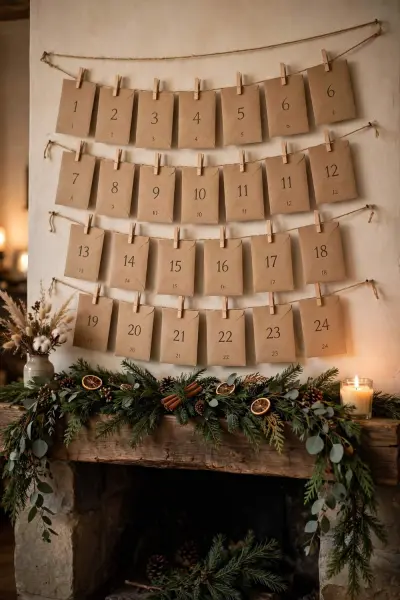
This is the easiest advent calendar to put together, and most people can finish it in a single evening. You need 24 small envelopes (coin or seed envelopes work well, and a pack typically costs a few dollars), a length of twine about 8 to 10 feet long, 24 mini clothespins and a marker or number stamps. Number each envelope from 1 to 24, slip in a note, an activity card or a small flat treat such as a sticker sheet or a tea bag, and clip the envelopes along the twine. Hang it across a mantel, over a window or along a hallway wall using removable adhesive hooks so you do not damage the paint.
Because the envelopes are flat, you can plan the whole month in advance and still swap a card the night before if the schedule changes. For a nicer look, use a repeating color pattern such as red, green and kraft, and tie a sprig of greenery to the middle of the twine. The main thing to avoid is overfilling: envelopes that bulge slip off the clips and tear. Keep each one to something thin, and put any larger treat in a small bowl with a matching number card instead. If you have more than one child, give each their own string so there is no argument about whose turn it is.
2. Cardboard tube calendar
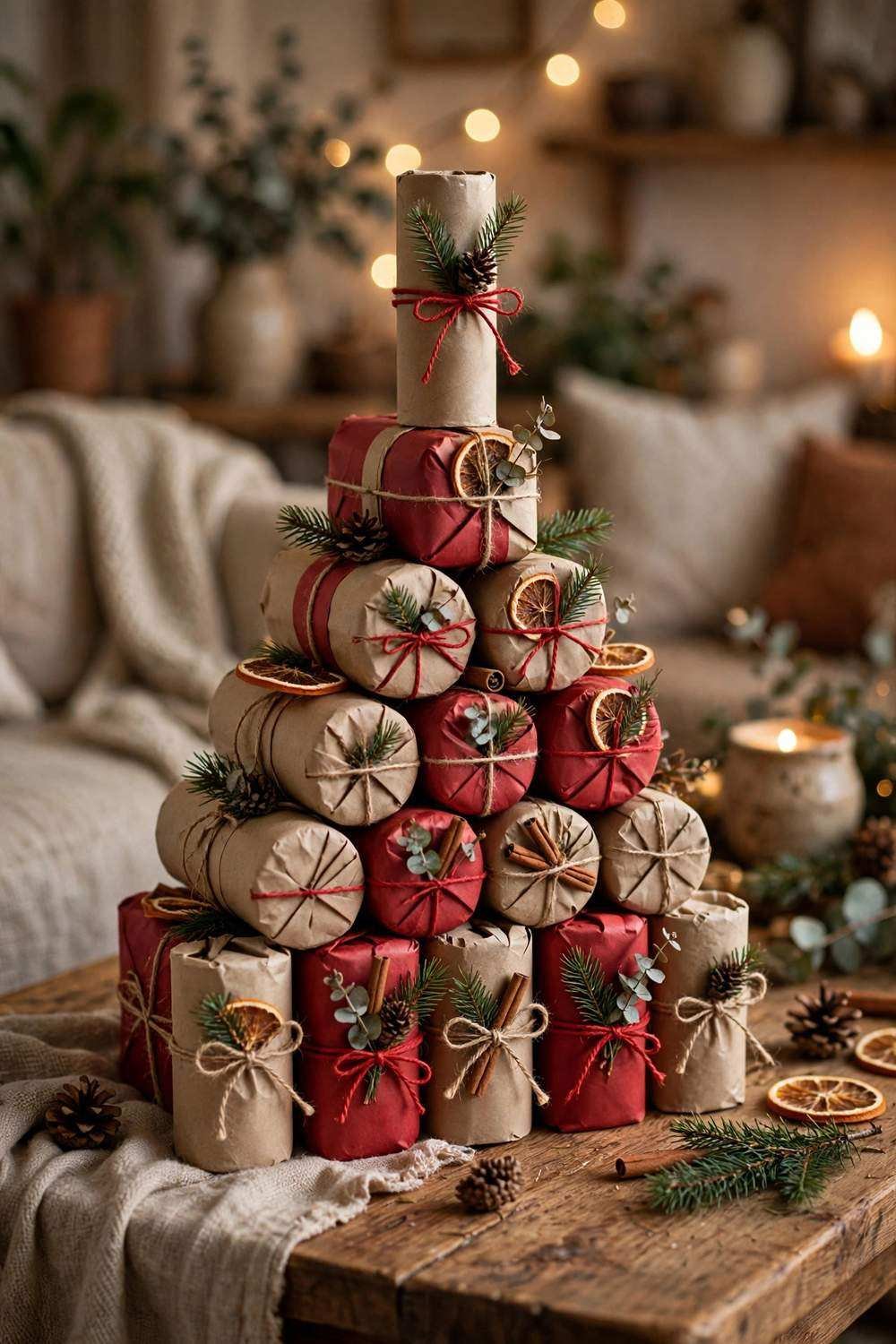
Start saving 24 toilet paper or paper towel tubes a few weeks ahead, cutting the longer paper towel tubes in half, or ask friends and family to collect them for you. Fold one end flat and tape it shut, drop in a small treat or a folded note, then fold and tape the other end. Wrap each tube in kraft or festive paper, tie it with twine or thin ribbon and add a number with a stamp, marker or sticker. The supplies are mostly things you already have, so the real cost is the wrapping paper and whatever goes inside.
Arrange the tubes in a pyramid, in the shape of a tree, or glue them onto a sheet of sturdy cardboard in rows so the whole calendar can hang on a wall. A hot glue gun holds well, but let an adult handle it. Tubes hold slightly more than envelopes: wrapped candy, small erasers, stickers or a coin. Avoid anything heavy or sharp. If you want to reuse the calendar next year, tape the ends with removable tape instead of gluing them, and store the tubes flat in a box. The paper wrap can be replaced in a few minutes if it tears.
3. Mini paper bag garland
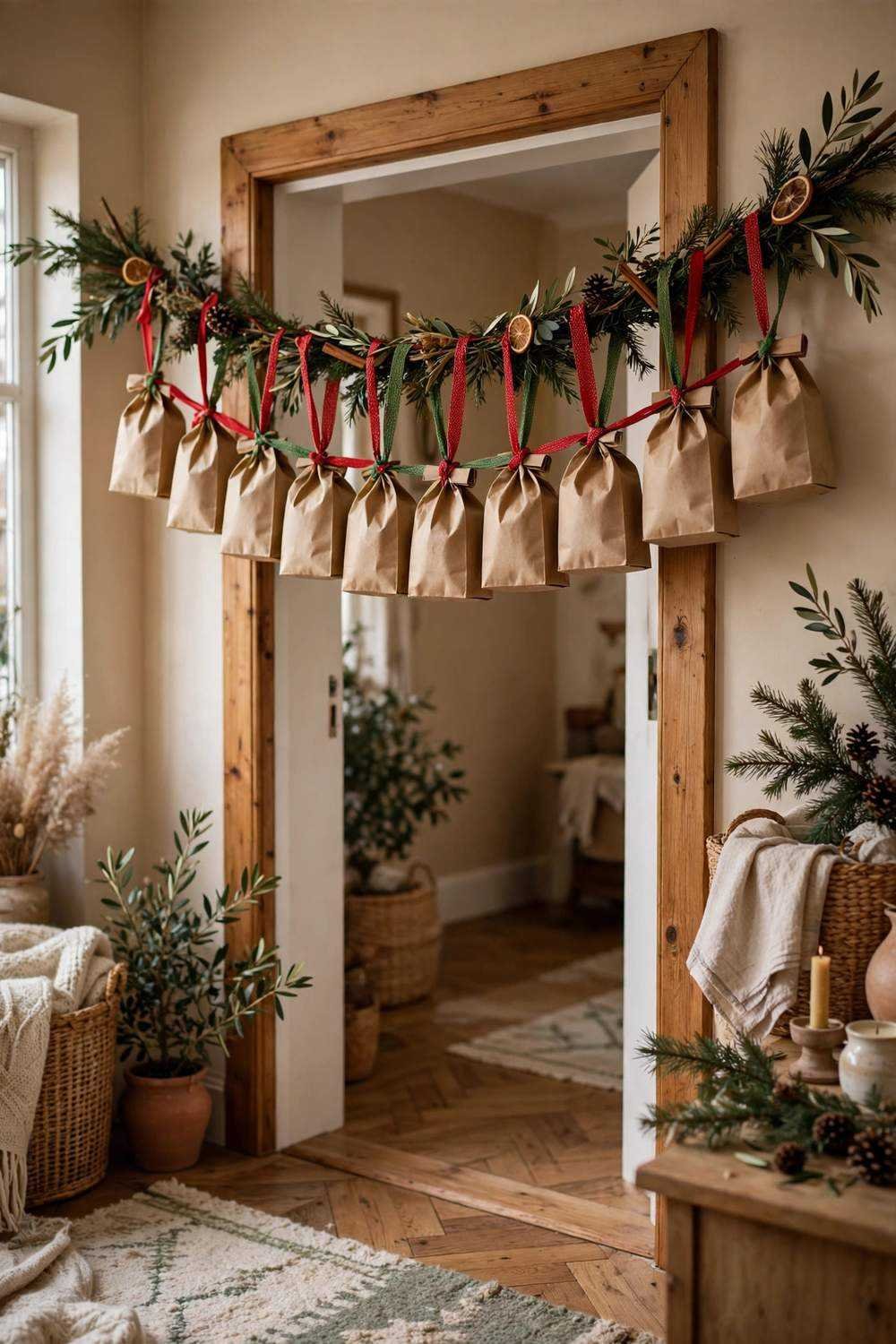
Small kraft bags, about 3 by 5 inches, are usually sold in packs of 50 or 100 for a few dollars, which makes them one of the cheapest containers you can buy. Stamp or write a number on the front of each bag, fill it, fold the top over twice and secure it with tape or a clip so it cannot be peeked into. Then attach each bag to a long string with a clothespin, or punch a hole and thread ribbon through it. A garland across a doorway, a bookshelf or a curtain rod looks festive and is easy to take down on December 25.
Bags hold more than envelopes, so they suit stickers, small toys, wrapped candy, tea bags or mini bath items. Choose bags with a flat bottom if you prefer a tabletop display, because they stand upright and can be arranged in a tree shape. One safety point: paper burns easily, so keep the garland well away from candles, fireplaces and heaters. If you want it to look more polished, stick to two colors of string and ribbon and use the same number stamp throughout, and the repeated pattern makes the whole thing look deliberate.
4. Felt pocket calendar

A felt or fabric calendar with 24 pockets is the best choice if you want something you can pull out every December for years. You need a large piece of felt or sturdy fabric for the backing (roughly 24 by 36 inches), 24 smaller squares for the pockets, fabric glue or a needle and thread, number decorations and a dowel or ribbon for hanging. For a no-sew version, run fabric glue along the sides and bottom of each pocket, leaving the top open, and let it dry for a full day before filling it. If you sew, a simple running stitch is enough.
Arrange the pockets in six rows of four or four rows of six, and add numbers with iron-on letters, felt cut-outs or a permanent marker. A small felt tree or star at the top finishes the look. Pockets about 3 to 4 inches deep hold most small treats and folded notes. Try placing the numbers out of order so children enjoy hunting for the right pocket each day, and keep a master list of what goes in each one so you can refill it next year without starting from scratch. It takes longer than a paper calendar, but it is the most economical in the long run.
5. Activity advent with no sweets

Instead of treats, put a simple activity on a card for each day: drink hot cocoa by the tree, drive to look at Christmas lights, bake cookies, wrap presents together with music on, make paper snowflakes, write a card to a relative far away, watch a Christmas movie with popcorn or build a gingerbread house. This turns advent into time together rather than things, and it suits families who would rather skip a daily dose of sugar. It also costs very little, since most activities use items you already have.
The key to making this work is matching each activity to the day. Quick ideas of ten minutes or less belong on school nights, and bigger projects such as baking or a light drive belong on weekends. Slip a small supply into the envelope when needed, such as a cocoa packet or a recipe card, so the activity is ready to go. Keep one or two blank wildcard cards for days when the plan falls apart, and let the children choose the activity. Taking photos of each one makes a nice keepsake to look back on next year.
6. Acts of kindness advent

Each day carries one small act of kindness. Examples include leaving a thank-you note for the mail carrier, bringing a plate of cookies to a neighbor, calling a grandparent, donating a coat or tins of food, holding the door for others, leaving a kind comment for a coworker or picking up litter on a walk. It suits older children, teenagers and adults especially well, and most of the ideas cost nothing. Write the acts on cards ahead of time so the habit does not depend on remembering on the day.
If you plan to donate items, check what your local food bank or charity currently needs before you shop, because their lists change. For younger children, choose acts they can do themselves, and talk about how it felt afterward instead of rewarding it. A simple chart on the fridge, with a sticker for each completed day, keeps everyone on track. The goal is to build a habit that carries through the year rather than to put on a show, so it is fine to repeat favorite acts or skip a day and catch up the next.
7. Tea or hot cocoa countdown

For adults, a tea or cocoa advent is quick to put together. Buy a variety box of tea bags or hot cocoa packets, choose 24 different ones and wrap each in a small envelope or a square of paper with a number on it. Add a short note with each, such as a brewing tip, a flavor description or a favorite memory. Pack them in a shallow box with dividers, a tray or a basket. It also makes a thoughtful gift for a friend, a teacher or a coworker, and it costs less than most store-bought luxury advent calendars.
Mix flavors so there is something for every mood: a few classic blacks, some herbal and decaf choices for the evening, a few fruity teas and several cocoas. Pair a few days with a small extra such as a cookie, a honey stick or a mini marshmallow packet. Check the expiry dates, and store the bags somewhere dry. If you give this as a gift, include a list of what is in each envelope so the recipient can plan which ones to save for special days.
8. Book advent

Wrap 24 picture books, some borrowed from the library and some from your own shelf, and unwrap one each evening to read together. Books you already own feel new when wrapped, and library books cost nothing. Use plain paper tied with twine or reusable fabric wraps so the wrapping lasts, and put a number on each. Library loan periods are often two or three weeks and many libraries allow renewals, so borrow in batches and check the due dates before December.
Put shorter books on busy nights and save the longer ones for weekends. Keep a family favorite for Christmas Eve, and tuck a note or a drawing prompt inside a few of them. For older children and adults, choose short stories, poems or a novella split into daily readings. Once the tradition is established, add one new book to your collection each year, and in time you will have a ready-made advent library that costs nothing to set up.
9. Paper chain countdown

A paper chain is the simplest countdown of all. Cut 24 strips of colored paper, about 1 inch by 8 inches, and make each into a loop with glue or tape, linking it through the previous one. Before you close each loop, write a small activity or message on the inside so the child sees it when the link is torn off. Make the first link at the bottom end of the chain, so each day's link is the lowest one, and hang the chain from a hook or a door frame.
The whole project costs a few cents and takes about 15 minutes, which makes it ideal for children to help with. Use red and green or a mix of festive colors, and glitter pens for the numbers. The chain also works well in classrooms or shared spaces, because everyone can see the number of days left. Because it uses only paper, keep it away from candles and heaters, and use tape rather than staples for young children.
10. Jar of folded notes
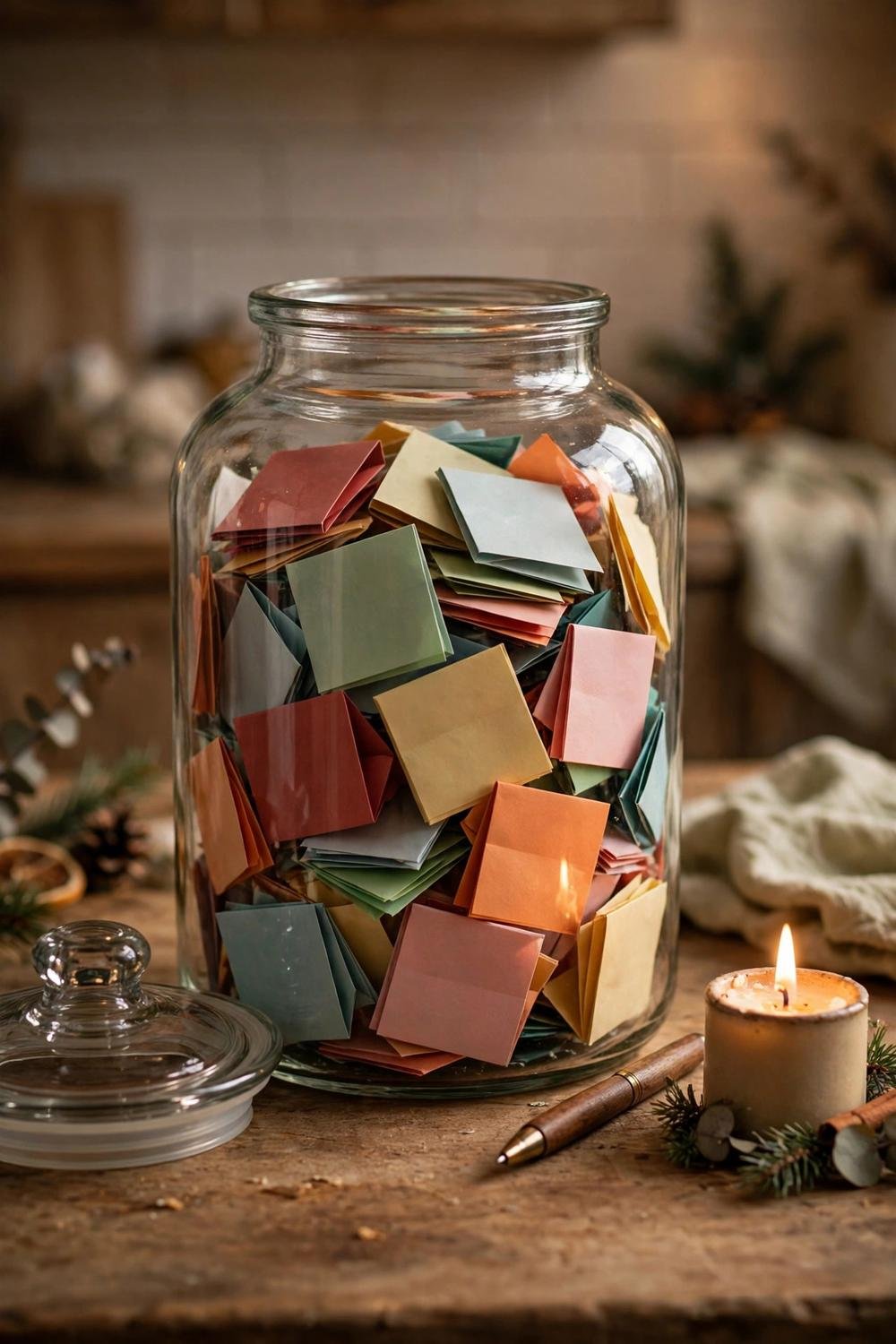
Fill a large glass or plastic jar with 24 folded slips of paper, each with a small surprise: a joke, a challenge such as building a blanket fort, a family memory, a treat voucher or a simple instruction like dancing to a favorite song. Draw one each day. Drawing at random means no one knows what is coming, and a jar takes up much less room than a wall calendar. If you prefer a set order, add numbered tags to each slip.
Use different paper colors to mark categories, for example green for activities, red for treats and white for kindness, so you can keep a balanced mix. Add one or two wildcard notes, such as choosing the dinner or staying up 15 minutes later. For couples, the notes can be small date ideas or things you appreciate about each other. Keep the jar on the kitchen counter next to a pen, so family members can add their own ideas during the month.
11. A wooden box with drawers
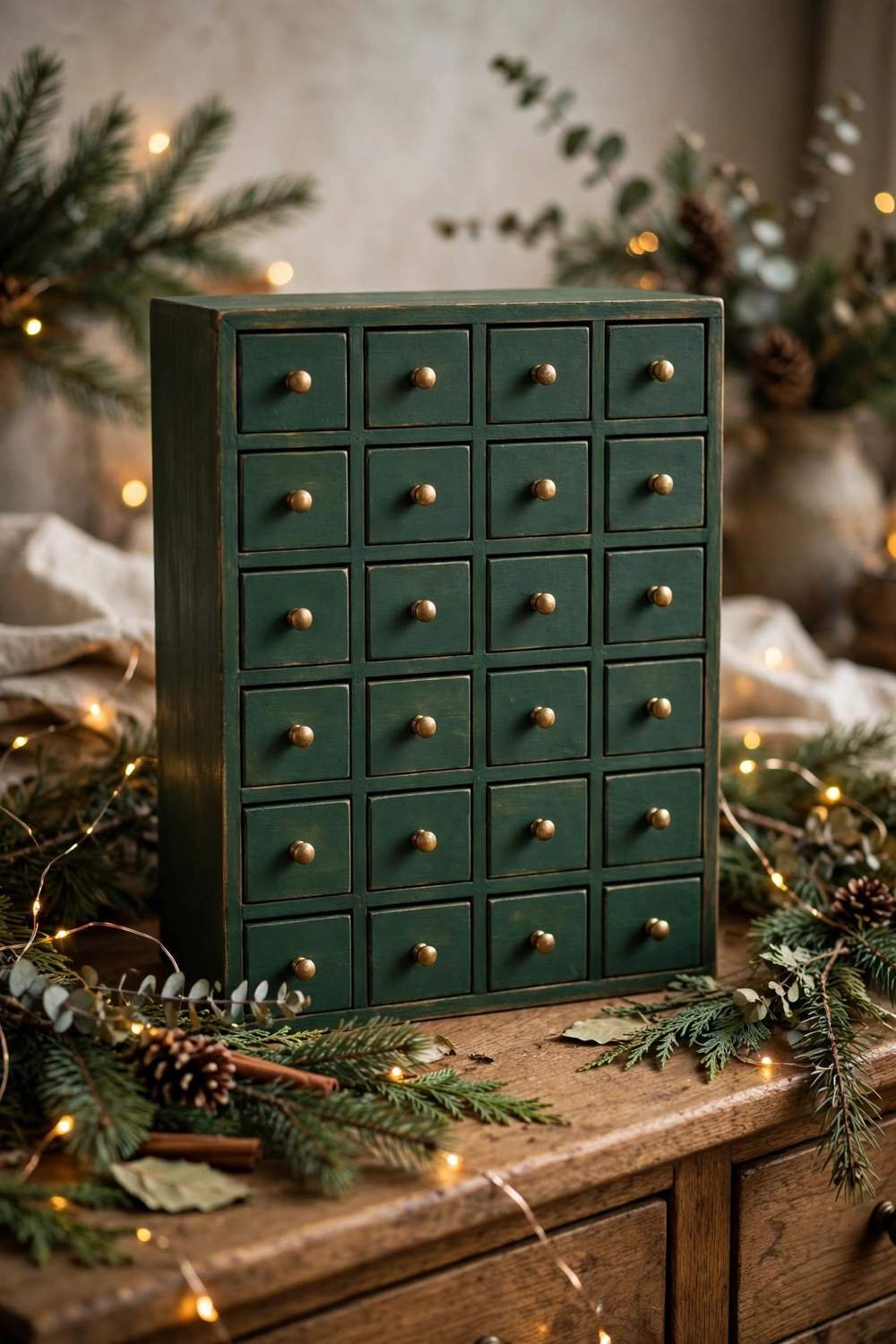
A wooden advent box with 24 small drawers or doors can be bought plain and filled with your own items. Prices vary widely, and it is typically the most expensive option on this list, but it lasts for years. Paint it with acrylic paint, seal it with a clear coat and add numbers with stickers or a paint pen. Make sure the paint is completely dry before filling the drawers, so nothing sticks.
Plan all 24 fillings first and buy them in one trip. Good small items include chocolate coins, mini candles, stickers, small toys, hair accessories, jam jars or spice samples. Keep items small and safe: anything under about 1.75 inches can be a choking hazard for children under three. Store the box with a card listing what went in each drawer, and refill it every year with new items, which brings the cost down over time.
12. An upgraded store-bought calendar
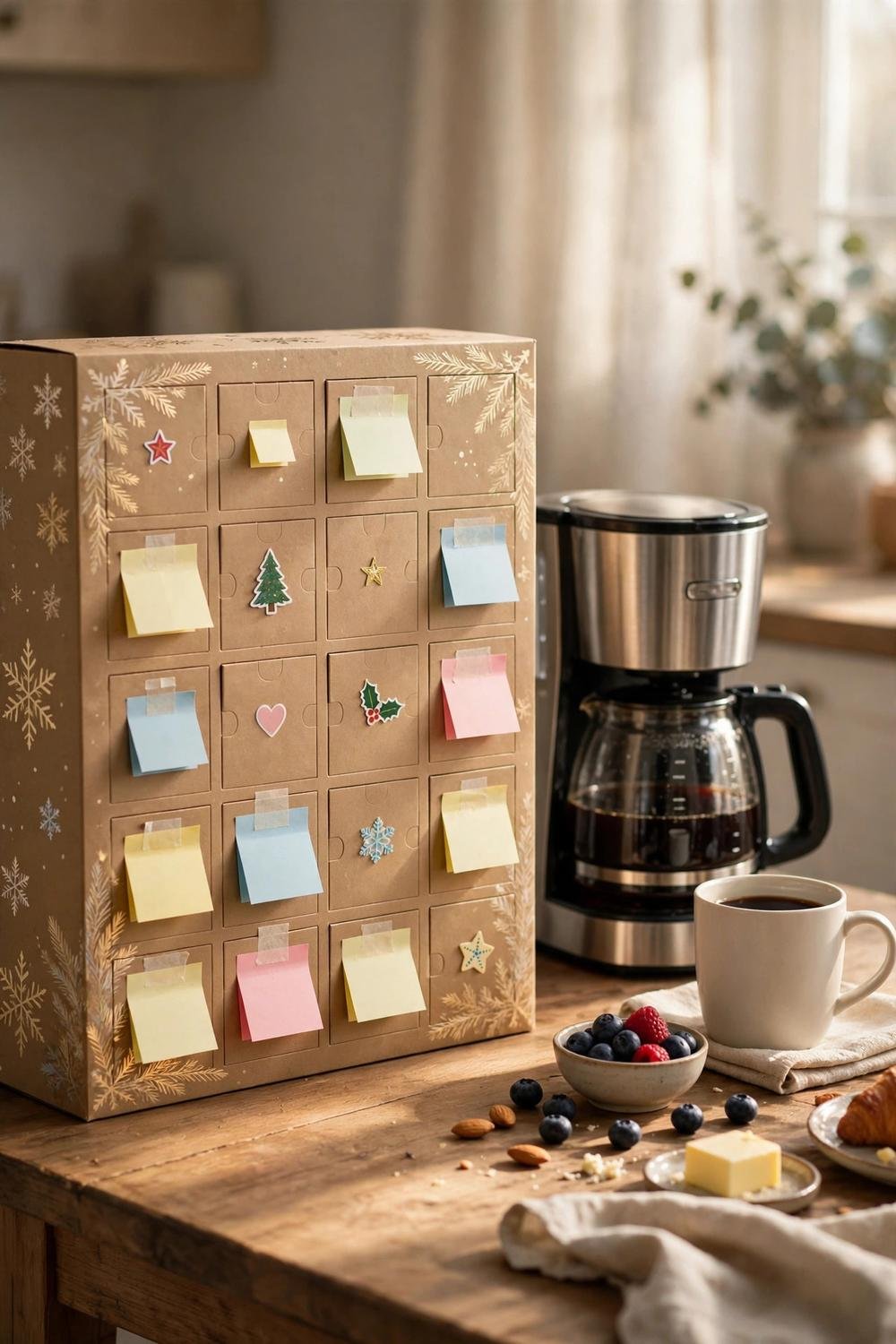
A cheap store-bought calendar can be made more personal in an evening. Add a sticker or a handwritten note to each window, tape a small extra treat inside or replace the supplied chocolate with your own choices. If the box is cardboard, you can refill it next year, and some brands sell refillable fabric or cardboard versions with empty compartments. It is the right choice when you are short on time but still want a personal touch.
Keep the calendar in a place you pass every morning, such as next to the coffee maker or on the breakfast table, so opening a door becomes part of the routine. Store it out of reach of toddlers and pets, since chocolate can be harmful to dogs. A simple rule such as one door per day, opened after breakfast, helps avoid arguments. Check the use-by dates on any food inside before you hand it over.
Frequently asked questions
When does advent start in 2026?
Advent begins on the fourth Sunday before Christmas, which is November 29, 2026. Most homemade calendars count from December 1 to 24.
How much does it cost to make an advent calendar?
Paper-based calendars such as envelopes, paper chains and jars usually cost a few dollars. Felt calendars, wooden boxes and calendars filled with treats cost more, depending on what you put inside.
What can I put in an advent calendar besides candy?
Activity cards, kindness notes, stickers, small toys, tea bags, jokes, family memories, short stories or a small note work well.
Can I reuse a homemade advent calendar?
Yes. Felt pockets, wooden boxes and tubes or bags sealed with removable tape can be refilled every year. Keep a list of what you put in each one so refilling is quick.
How do I keep kids from opening everything early?
Use containers that close with a clip or tape, hang the calendar out of reach and keep a simple rule of one door a day. Mixing up the number order also keeps it interesting.
What if I am starting late?
Start a paper chain, a jar of notes or a set of envelopes, which can be finished in an evening. You can also count down from the day you start and skip earlier numbers.
Save these ideas for later
Pin this article so it is easy to find when you are ready to start.
Save to Pinterest