12 Vision Board Ideas for the New Year
A vision board is a collection of images and words that show what you want the next year to look like. It is not magic, and it does not replace planning, but it works as a daily reminder of your goals in a way that a list on a phone never does. When the board hangs somewhere you see it every morning, the goals stay in your mind, and small decisions during the day start to point in the same direction. These 12 vision board ideas cover every style, from a classic magazine collage to a digital board on your phone, and most of them cost nothing or a few dollars in supplies.
Before you start, spend ten minutes writing down what you actually want next year. Pick three to five goals, not twenty, and make them specific: a place you want to visit, a skill you want to learn, a habit you want to build, or a change you want to make at home. Then find images that match each goal. A photo of a real place beats a vague picture of happiness, and a picture of your own running shoes beats a stock photo of a marathon. The board should feel personal, not like a page from a magazine.
A practical tip: put the board where you will see it every day, such as the bedroom wall, the fridge or the inside of a wardrobe door. Look at it for a minute each morning and ask what one small thing you can do today that points toward it. Review the board every three months and replace images that no longer fit. If a goal changes, change the board: it is a working tool, not a finished artwork.
Jump to an idea (12)
1. Classic magazine collage board
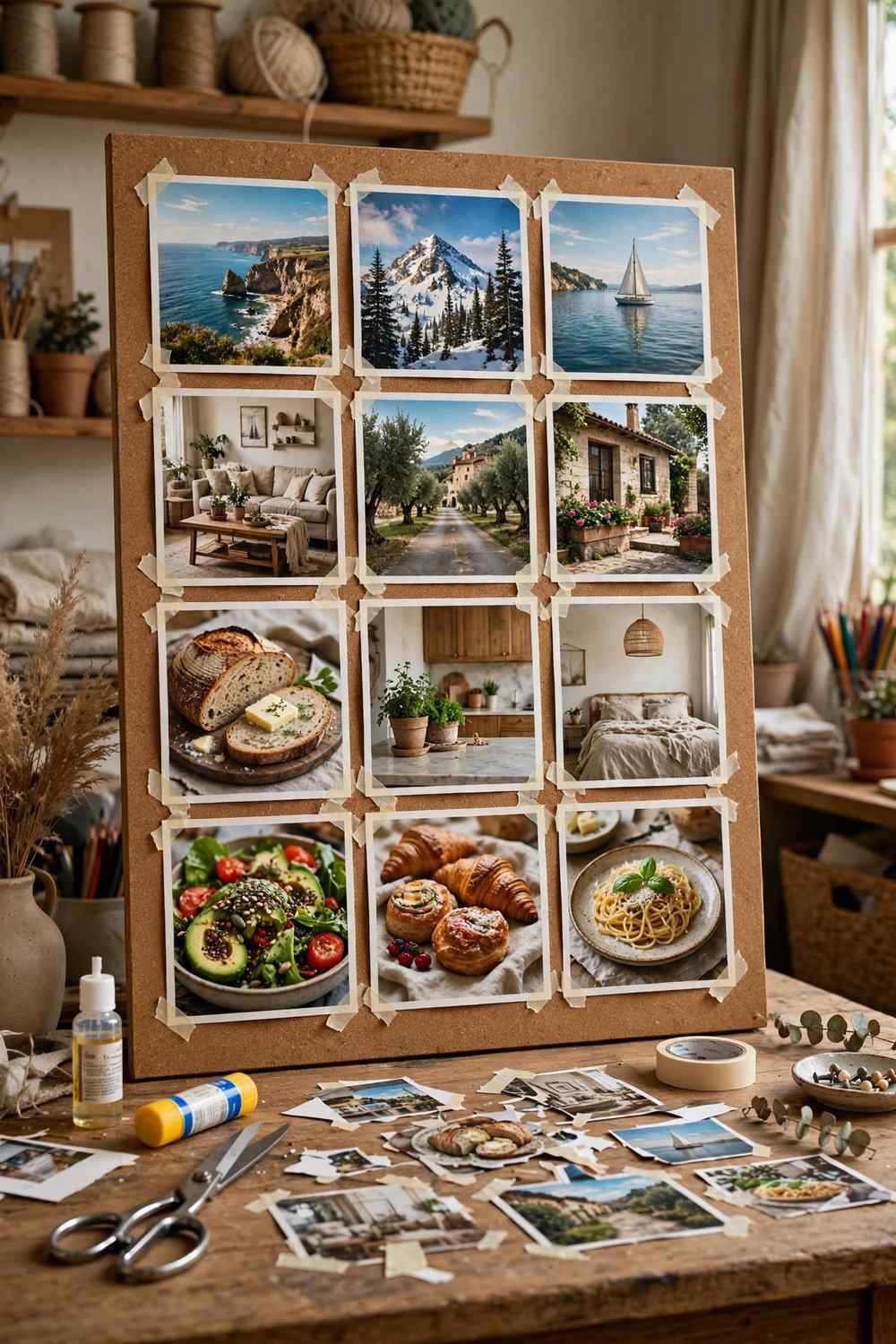
The classic vision board is a cork board or a large piece of card covered with images cut from magazines. A cork board costs about $8 to $12, a pack of pins costs $2, and old magazines are free from friends, a library or a waiting room. Spend an evening cutting out pictures that match your goals, arrange them on the board, and pin them in place. Leave a little space between images so the board does not look crowded, and add a few words or short phrases that matter to you.
Start by sorting your cut-outs into groups, such as travel, health, home and work, then place one group in each corner of the board. If you run out of magazines, print photos from your phone for free at a library or for a few cents each at a print shop. Hang the finished board in your bedroom or your workspace, and do not hide it in a cupboard. If a goal changes during the year, swap out the picture: the board is meant to change with you, not to stay frozen in January.
2. Digital vision board as phone wallpaper
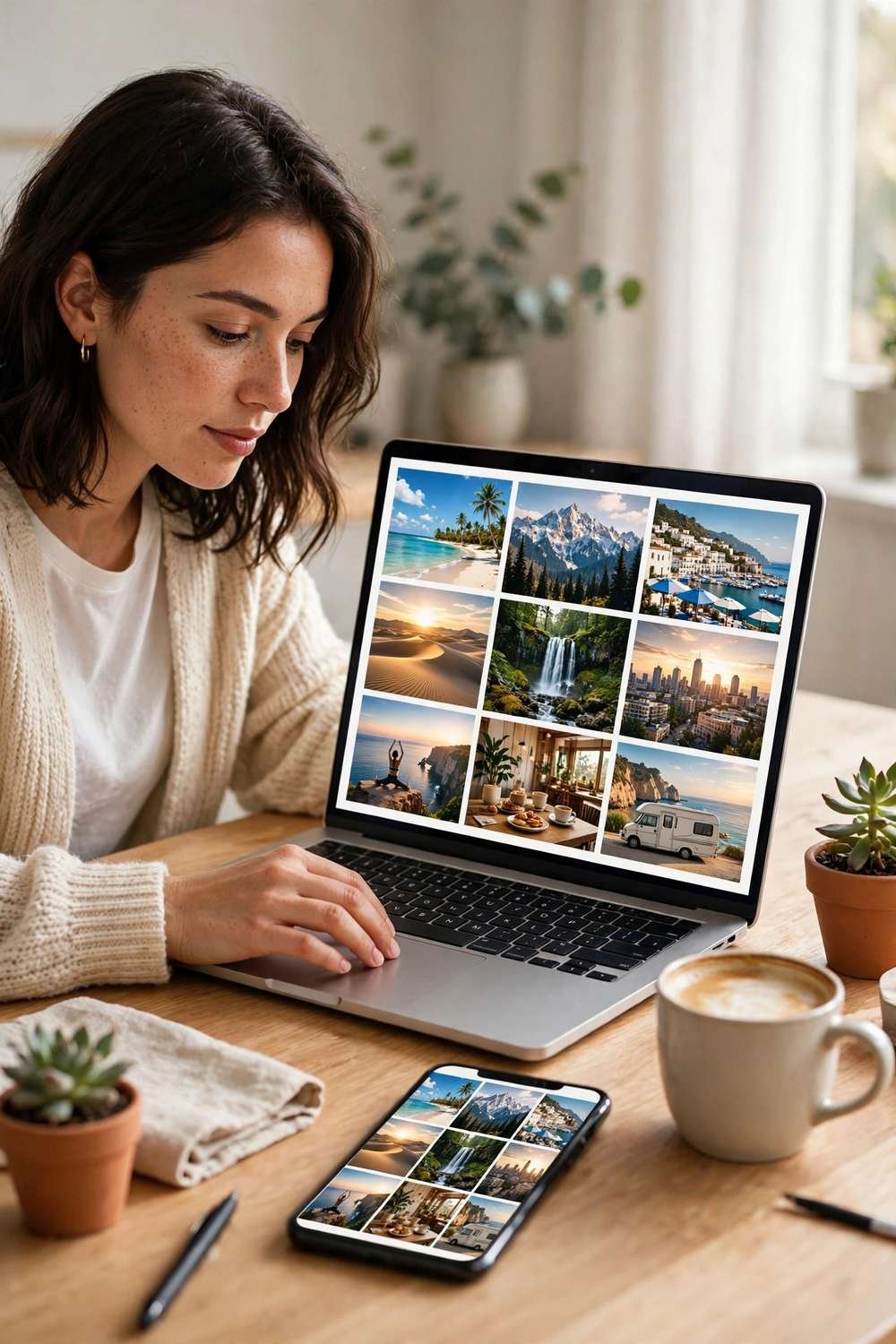
A digital vision board lives on your phone, which means you see it dozens of times a day without trying. Use a free app such as Canva or a simple photo grid app to arrange eight to twelve images into a single picture, then set it as your phone wallpaper or lock screen. The whole thing takes about 30 minutes and costs nothing. Choose images from your own camera roll where possible, since a photo of your own running shoes or your own kitchen means more than a stock image.
Keep the layout simple: a grid of four to six large images is easier to read on a small screen than a crowded collage. Add one or two words at the most, and use a dark background so the images stand out. Change the wallpaper every three months to match your goals as they shift, and keep a copy of each version so you can look back at the end of the year. The main risk is that the board becomes invisible after a few weeks, so move one image each month to keep it fresh.
3. Travel dreams board
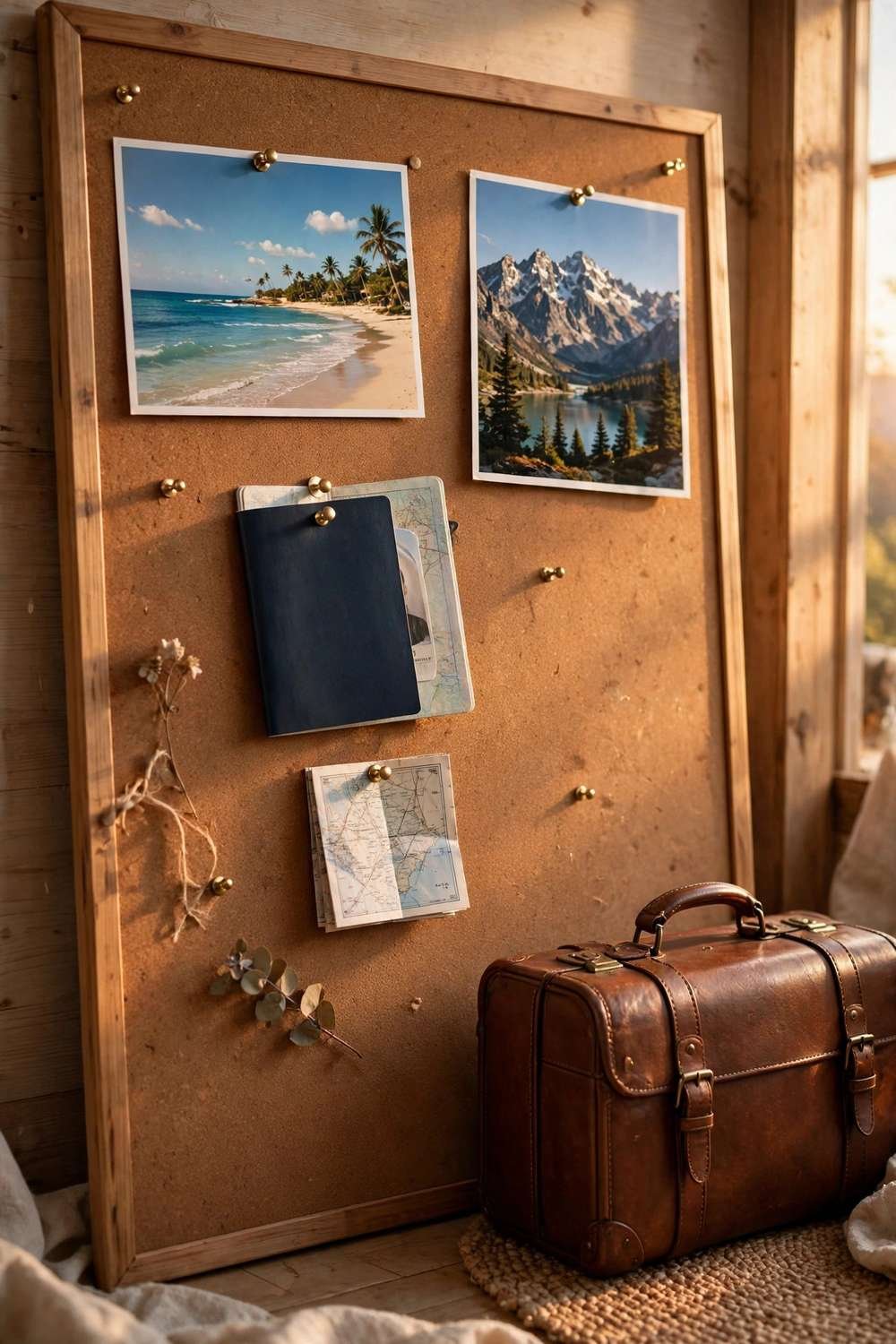
A travel board focuses on one thing: the places you want to go. Pick one to three trips for the year, find photos of each place, and pin them to a board with a small map, a passport and a note of the rough cost. A board, some pins and a printed map costs about $5, and the photos can come from magazines or from free printable sites. Seeing the destination every day makes it feel real, and it makes the saving and planning feel like part of the trip rather than a chore.
Be specific: a photo of a beach in Greece is nice, but a photo of the exact beach you want to visit, with the month you want to go, is far more motivating. Add a small savings tracker next to each trip, such as a jar or a chart, so you can see the money adding up. If a trip feels out of reach, add a smaller local trip alongside it so you still have something to look forward to. Review the board when you book flights or hotels, and tick off each trip once it happens.
4. Career goals board
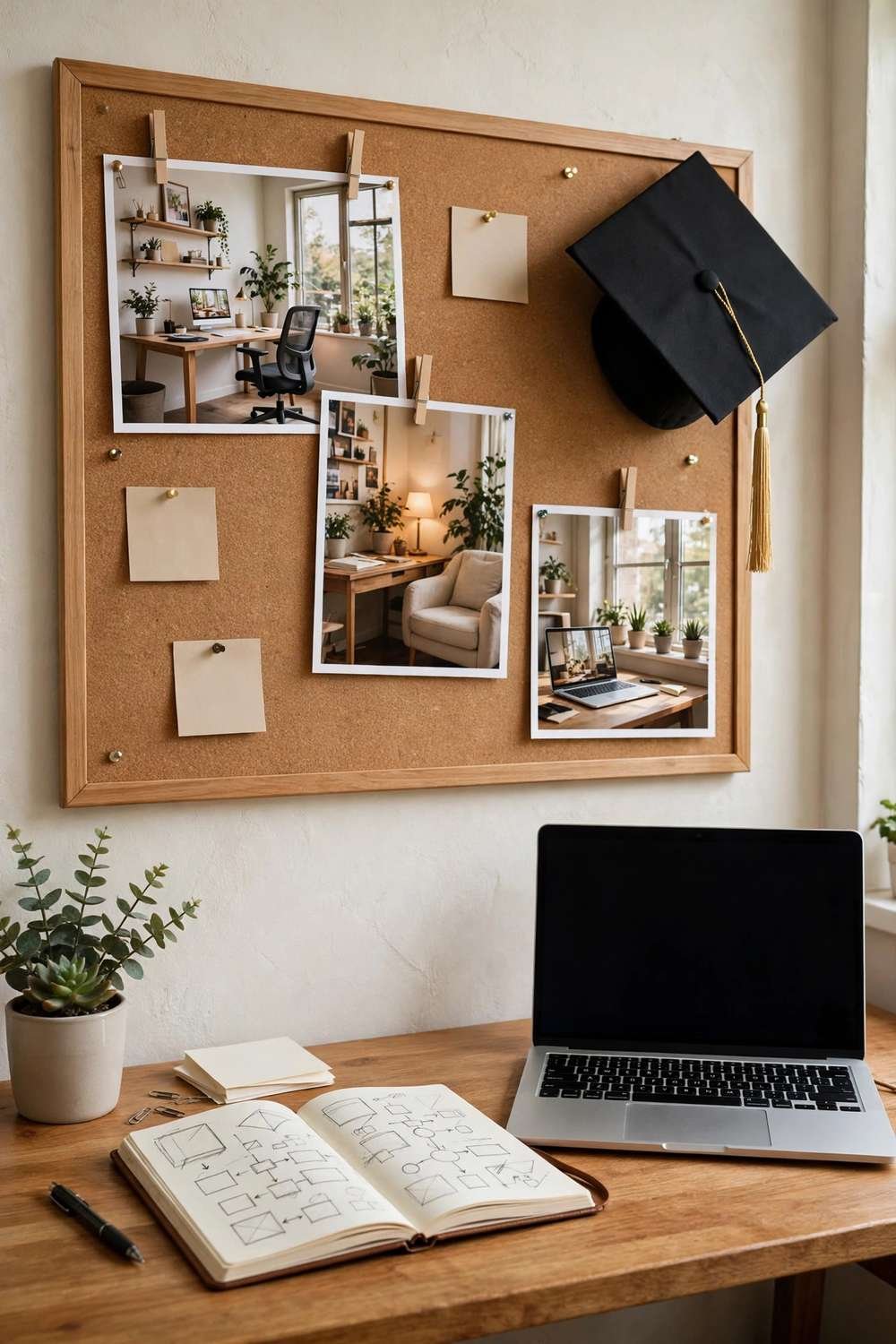
A career board is a private way to keep your work goals visible without putting them on a public profile. Use a small board in your home office or the inside of a wardrobe door, and pin images that match what you want: a photo of your dream workspace, a certificate, a book about your field, or a picture of a skill you want to learn. A small cork board costs about $8, and the images can be printed at home. Keep the board to five or six images so it stays focused.
Pair each image with a small step you can take this month, such as signing up for a course, updating your CV, or asking a colleague for advice. Write the steps on small cards and pin them next to the pictures, and move the card to a "done" pile when you finish it. Do not put anything on the board that would embarrass you if a coworker saw it, and keep salary goals private by using a symbol rather than a number. Review the board every month and replace images as your goals change.
5. Health and fitness board
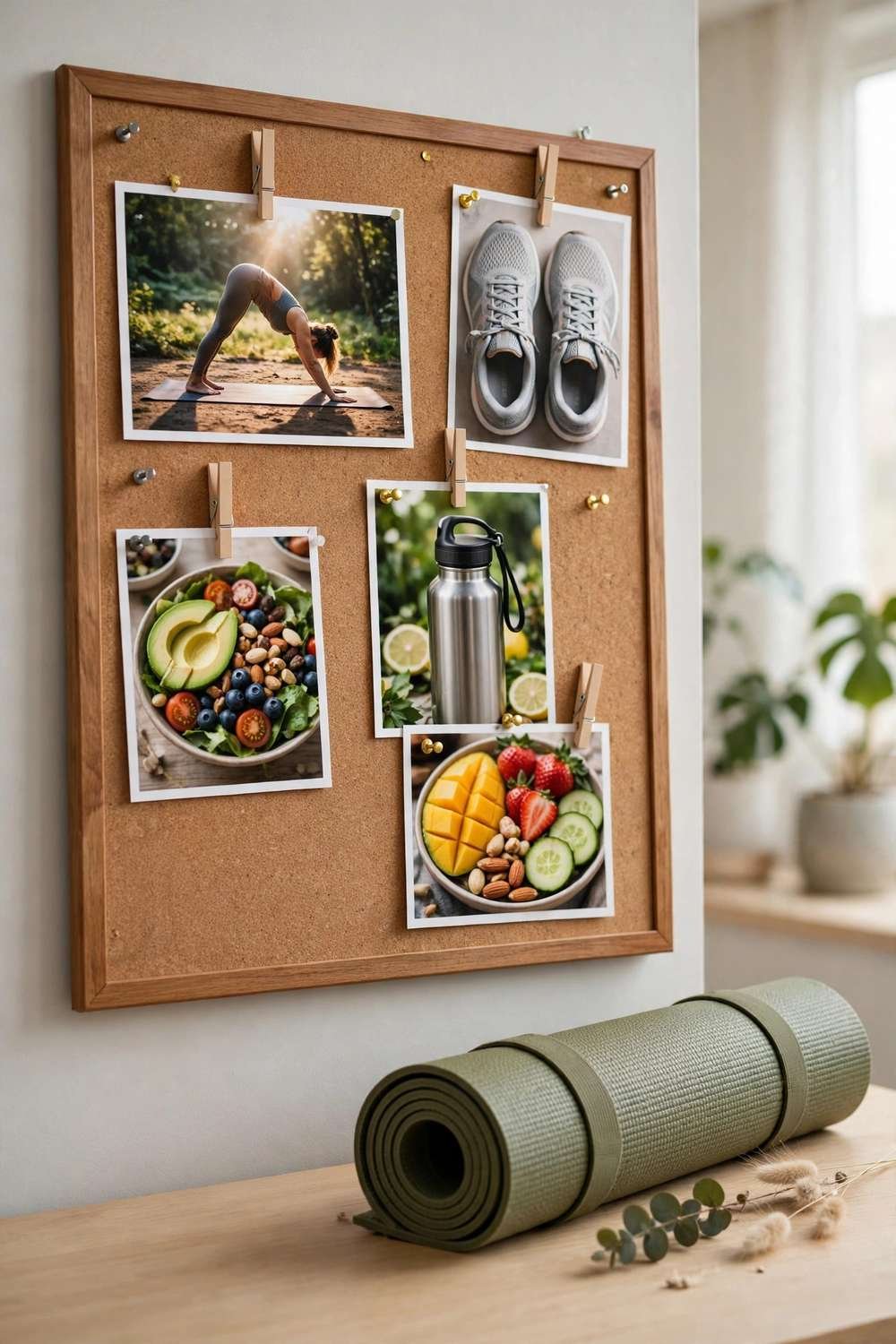
A health board works best when it focuses on how you want to feel rather than how you want to look. Pin photos of activities you enjoy, such as yoga, swimming, walking in the park or cooking a healthy meal, and add a picture of your running shoes or your water bottle. A small board and a few printed photos costs about $5, and you can use your own photos from your phone for free. Hang the board in your bedroom so you see it in the morning, when you decide how the day will go.
Add one small, specific goal next to each image, such as "walk 30 minutes, three times a week" or "cook at home four nights a week", written on a card. Avoid before-and-after photos or images that make you feel bad about yourself, since the board should motivate you, not punish you. If you exercise with a friend, add a photo of the two of you together. Update the board when you reach a goal, and replace the image with a new challenge so the board keeps growing with you.
6. Home dreams board
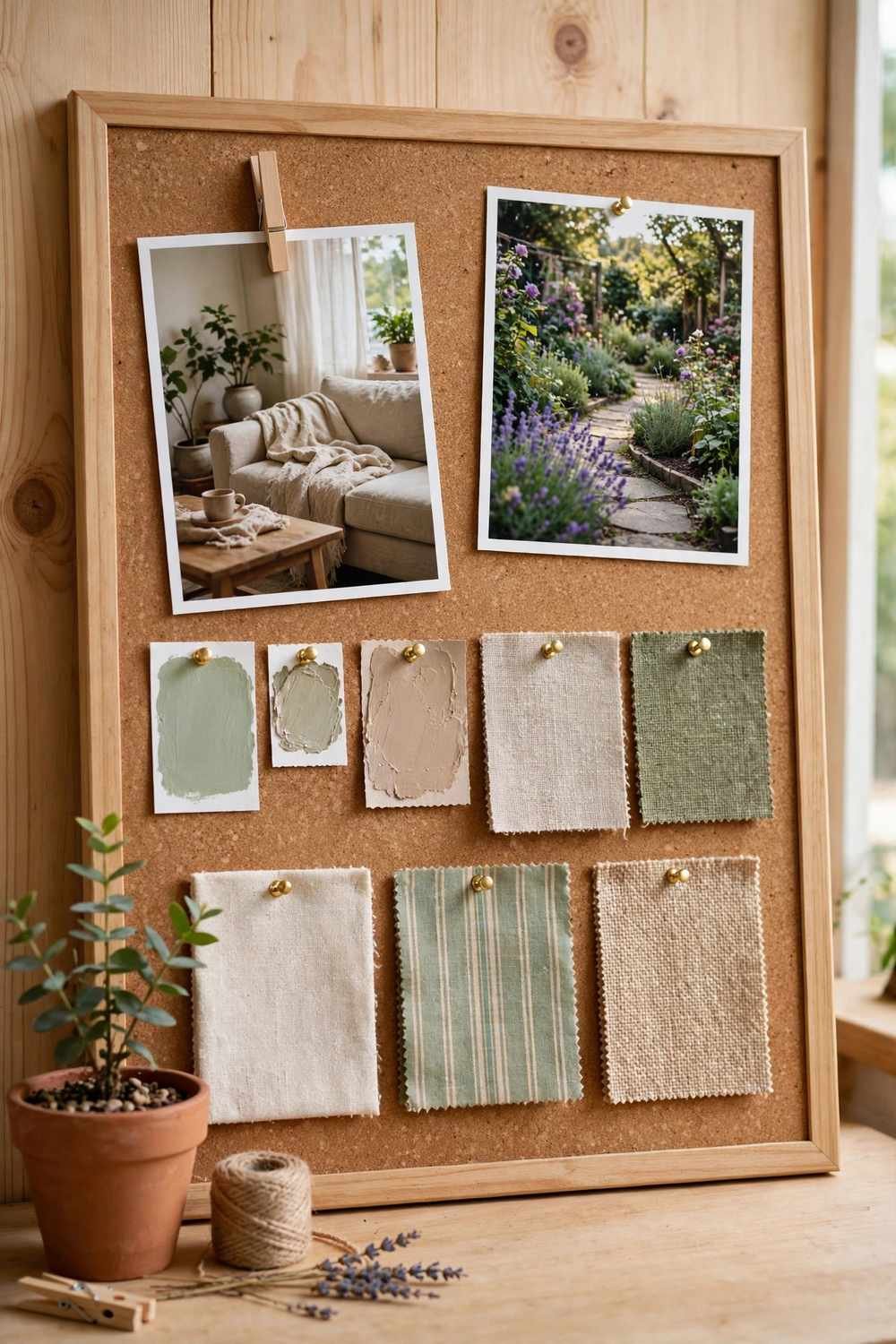
A home board collects the changes you want to make to your living space, from a new coat of paint to a garden you want to plant. Pin photos of rooms you like, paint color swatches from a hardware store, fabric samples and pictures of furniture you are saving for. Paint swatches are free from most hardware stores, and a small board costs about $8. The board helps you see whether your ideas work together before you spend any money.
Start with one room, such as the living room or the bedroom, and limit yourself to six images so the board stays clear. Add a note of the rough cost next to each idea, and mark the ones you can do for free, such as rearranging furniture or decluttering a shelf. Work through the board one project at a time, and take a photo of each finished change to pin next to the original picture. If you rent, focus on changes you can take with you, such as cushions, plants and artwork, rather than anything fixed to the walls.
7. Money goals board
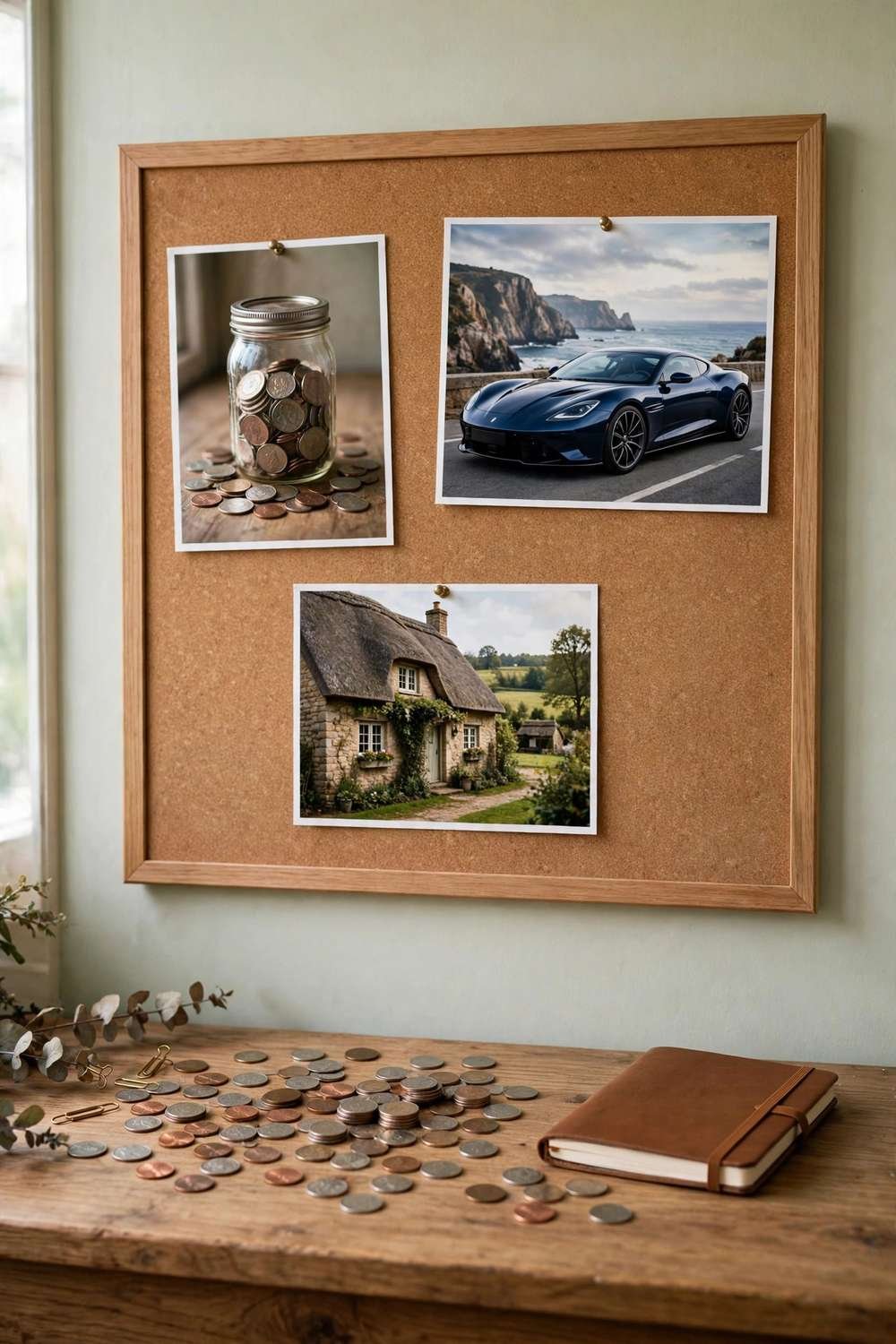
A money board makes a savings goal feel real by showing what the money is for. Pin a photo of the thing you are saving for, such as a holiday cottage, a car or a new laptop, next to a picture of your savings jar or a simple savings chart. A board, some pins and a printed chart costs about $5. Seeing the goal every day makes it easier to skip a small purchase, since the trade-off is visible rather than abstract.
Keep the numbers private: use a symbol, such as a jar that you fill in with a marker, rather than writing the amount on the board where visitors can see it. Set a small monthly target and color in one section of the chart each time you hit it. If you have more than one goal, use a separate board or a separate section for each, so the board does not become confusing. When you reach a goal, take the photo down, celebrate, and replace it with the next one.
8. Family vision board
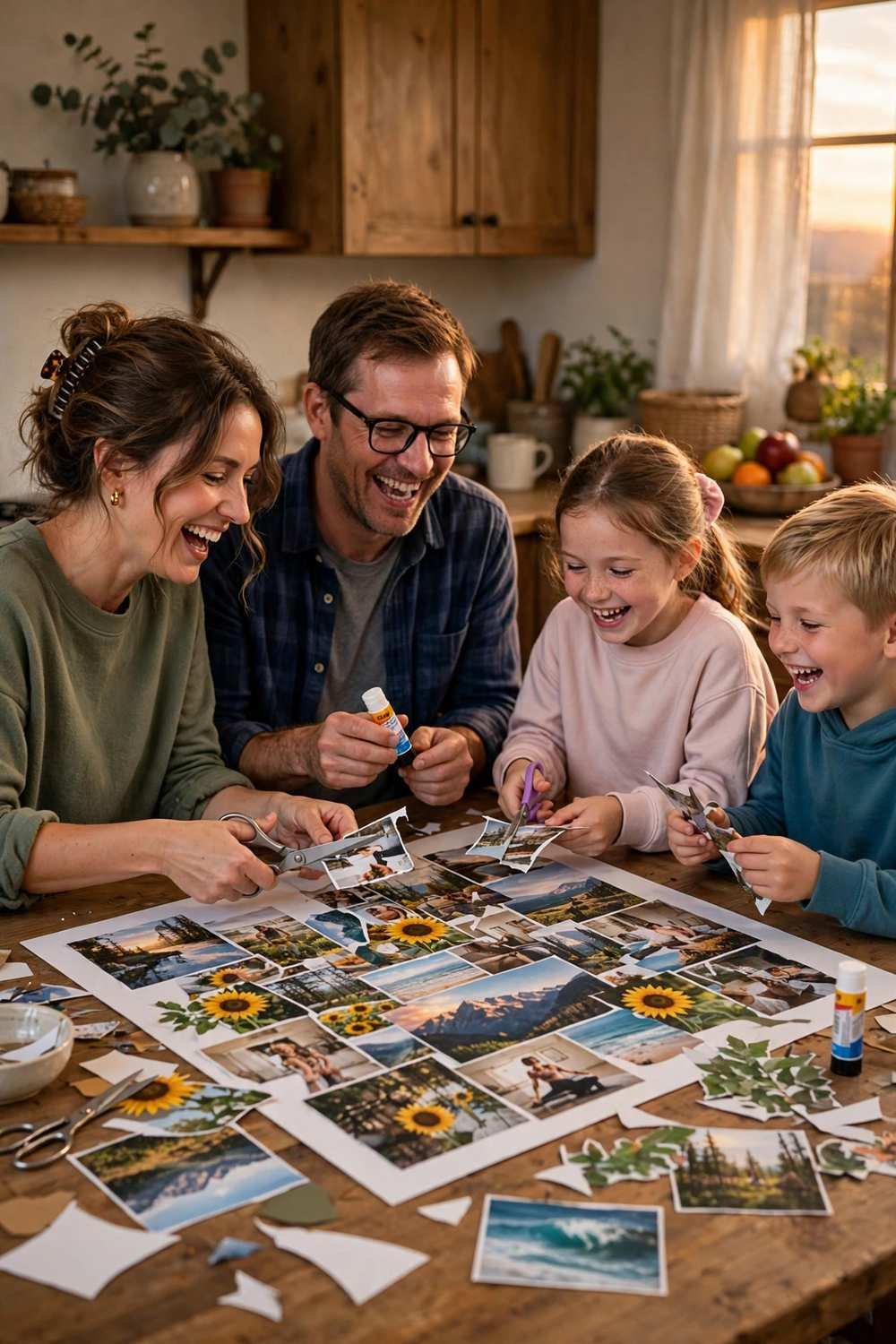
A family vision board is made together, with each person adding their own pictures and wishes. Spread a large piece of card on the kitchen table, put out magazines, scissors, glue and pens, and let everyone cut out what matters to them. A large sheet of card costs about $2, and old magazines are free. The activity takes about an hour, and the finished board is a picture of what the whole family wants from the year: a holiday, a new pet, a sport, or simply more time together.
Give each person their own corner of the board so nobody's wishes get crowded out, and let children choose their own pictures without correcting them. Write each person's name next to their section, and hang the board somewhere the whole family sees it, such as the kitchen or the hallway. Review it together every few months and tick off the things that happen. If a wish does not come true, talk about why and replace it with something new rather than leaving it on the board all year.
9. Word-of-the-year board
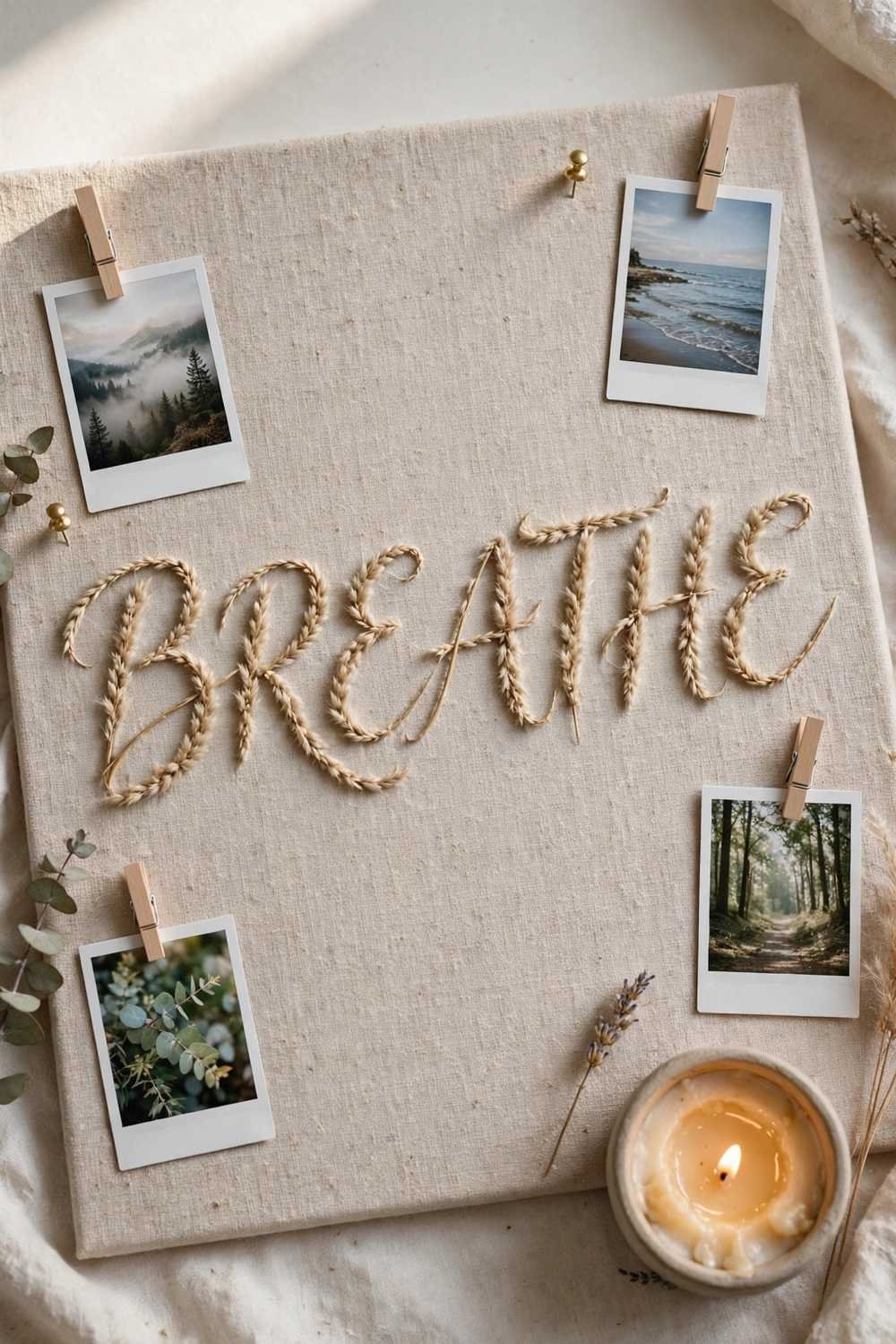
A word-of-the-year board is the simplest vision board of all: one word, chosen to guide your year, on a board with a few supporting images. Words such as "calm", "brave", "steady" or "enough" work well. Print or write the word in large letters on a piece of card, add three or four small photos that show what the word means to you, and hang it where you will see it every day. A piece of card and a marker costs about $2, and the whole board takes 20 minutes.
Choose the word carefully: it should feel like a direction, not a demand. If you pick "brave", the board might show a photo of a mountain you want to climb or a class you want to join. If you pick "calm", it might show a quiet morning, a tidy room or a walk in the park. Do not pick a word because it sounds impressive; pick the one that keeps coming back to you. At the end of the year, write a sentence about what the word meant to you and keep the board as a keepsake.
10. Gratitude vision board

A gratitude board focuses on what you already have rather than what you want next. Pin photos of your family, your friends, your home, your pet and your favorite meals, and add a few words about what each one means to you. A board and some printed photos costs about $5, and your own camera roll provides the pictures for free. The board works as a reminder on difficult days that the year already holds good things.
Add one new photo each month so the board grows through the year, and take one down if it no longer fits. Keep the board in a private place, such as your bedroom, since it is personal rather than decorative. If you like, write a short note on the back of each photo about why it matters. At the end of the year, the board becomes a record of the year that was, and a good starting point for next year's board.
11. Mini pocket vision board
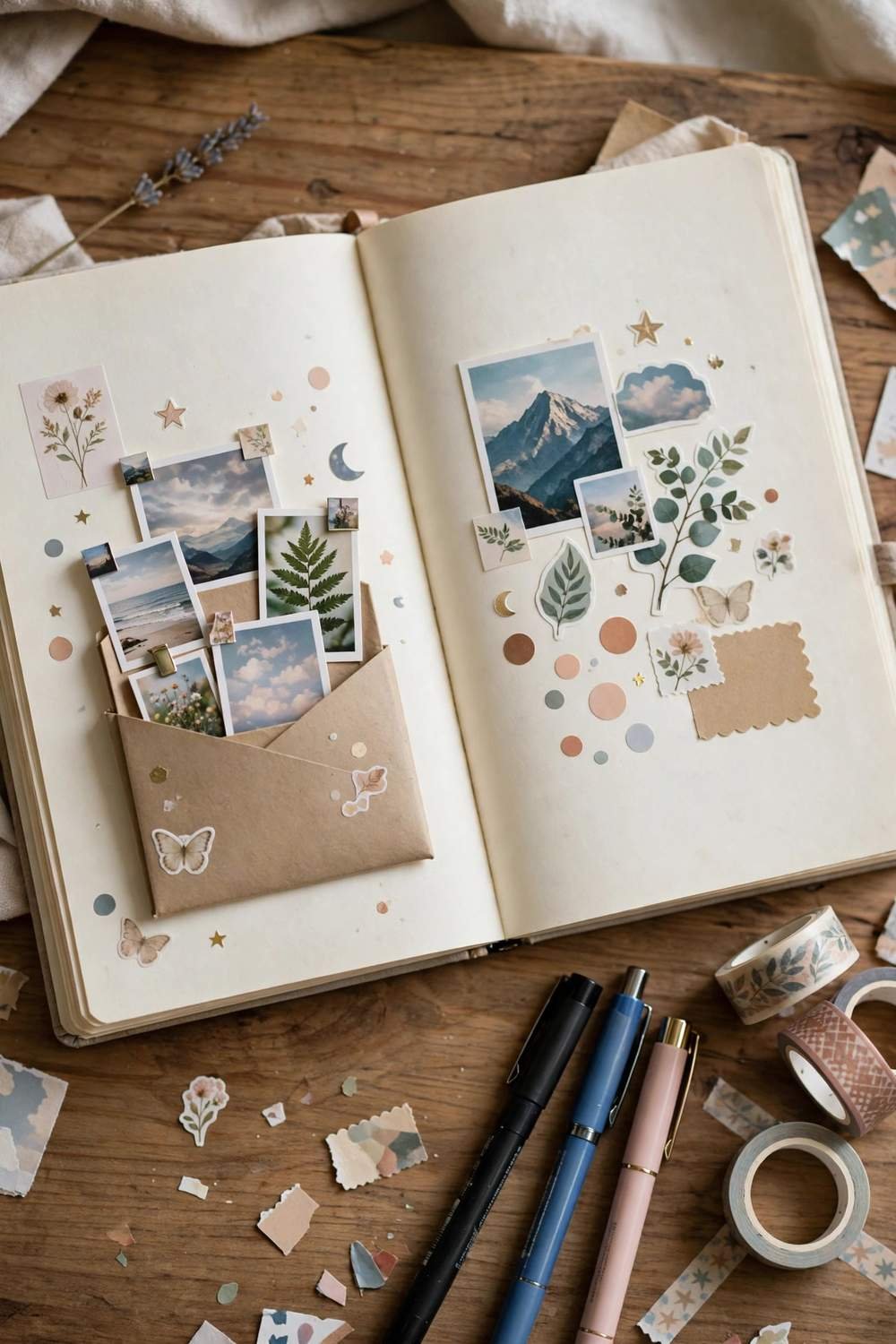
A mini vision board fits inside a journal or a notebook, which makes it private and portable. Cut small photos and words from magazines, stick them onto two pages of the journal, and add a few lines of writing about what each one means. A journal costs about $5 to $10, and the cut-outs are free. The board travels with you, so you can look at it on the bus, at lunch or in a waiting room, and nobody else needs to see it.
Keep the pages simple: four to six small images and a few words is enough. Use washi tape or stickers to decorate the edges, and leave space to add notes during the year. Review the pages once a month and write a short update next to each image, such as what you did toward that goal. If a goal changes, stick a new picture over the old one. The journal version suits people who do not want a board on the wall, or who travel a lot and want their goals with them.
12. Vision board party with friends

A vision board party turns a solitary activity into a social one. Invite four to six friends, ask each person to bring old magazines, scissors and glue, and provide a large sheet of card each, plus snacks and drinks. The host provides the boards and the table space, and each guest brings their own supplies, so the cost is shared at about $5 per person. Spend an hour cutting and gluing, then go around the table and let each person explain one image on their board.
Set a start time and a finish time so the party does not drift, and keep the music low enough for conversation. Do not judge anyone's board or goals: the point is to share, not to compete. Take a photo of each finished board before everyone leaves, and set a date three months later to check in with each other about how the goals are going. The party works well in early January, when everyone is still thinking about the year ahead, and it is a good reason to get together after the holidays.
Frequently asked questions
Do vision boards actually work?
A vision board works as a daily reminder of your goals, not as magic. Seeing your goals every morning keeps them in mind, which makes it more likely that you will act on them during the day.
What should I put on a vision board?
Put specific images that match three to five goals: a place, a skill, a habit or a change at home. Use your own photos where possible, and add one or two words at most.
How much does it cost to make a vision board?
A classic board costs about $10 to $15 in supplies, and a digital board costs nothing. Magazines are free from friends or a library, and printed photos cost a few cents each.
Where should I hang my vision board?
Hang it where you will see it every day, such as the bedroom wall, the fridge or the inside of a wardrobe door. A private place is better than a public one, since the board is personal.
How often should I update my vision board?
Review it every three months and replace images that no longer fit. If a goal changes or you reach one, swap the picture out so the board stays current.
Can I make a vision board with my family?
Yes. Give each person their own corner of a large board, let children choose their own pictures, and review it together every few months to tick off the things that happen.
Save these ideas for later
Pin this article so it is easy to find when you are ready to start.
Save to Pinterest